
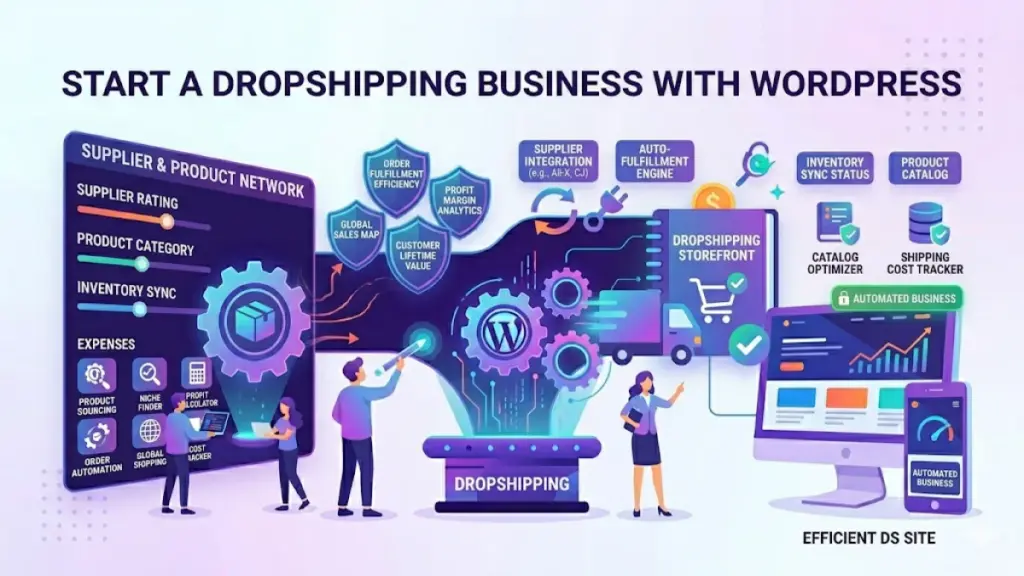
Dropshipping has become one of the most accessible ways to start an online business. With the right setup, you can sell products to customers around the world without ever holding inventory. When combined with WordPress and WooCommerce, dropshipping becomes a powerful, low-risk business model that anyone can launch. Here is everything you need to know to get started.
What Is Dropshipping?
Dropshipping is a retail fulfillment method where your store does not keep the products it sells in stock. Instead, when a customer places an order, you forward that order to a third-party supplier who ships the product directly to the customer. You never see or handle the product. Your profit is the difference between what the customer pays you and what you pay the supplier.
This model eliminates the need for inventory storage, upfront product purchases, and shipping logistics. It lowers the barrier to entry dramatically, making it an ideal business model for entrepreneurs who want to test product ideas without significant financial risk.
Why WordPress and WooCommerce Are the Best Platform
When it comes to building a dropshipping store, you have many options. But WordPress with WooCommerce stands out for several reasons. First, you have complete control over your store — there are no platform fees, no arbitrary rules, and no risk of your store being shut down by a third-party platform.
Second, WooCommerce integrates seamlessly with the most popular dropshipping suppliers and automation tools. Plugins like AliDropship, WooDropship, and Dropified connect your store to suppliers with just a few clicks, automating product imports, order fulfillment, and inventory updates.
Third, you own your customer data. Unlike selling on Amazon or eBay, every email address and purchase history belongs to you. This allows you to build a lasting relationship with your customers through email marketing, retargeting, and loyalty programs.
Choosing a Niche and Products
The most common mistake new dropshippers make is trying to sell everything to everyone. Focus on a specific niche where you can add value and build authority. Good niches for dropshipping include home organization, pet accessories, fitness gear, kitchen gadgets, eco-friendly products, and hobby-specific items like gardening or photography accessories.
When choosing products, look for items that are lightweight (lower shipping costs), have a perceived value higher than their actual cost, are not easily found on Amazon, and solve a specific problem for your target customer. Test multiple products before committing to large marketing campaigns.
Setting Up Your Dropshipping Store
Getting started with a WordPress dropshipping store involves a few key steps. First, choose a reliable hosting provider and install WordPress. Second, install WooCommerce and configure your payment gateway, shipping zones, and tax settings. Third, install a dropshipping integration plugin to connect with your chosen supplier. Fourth, import product listings with descriptions and images. Fifth, customize your store with a fast, conversion-optimized theme that presents your products professionally.
Your theme matters enormously for a dropshipping store. Customers need to trust your site enough to enter their payment details. A slow, poorly designed theme will destroy conversion rates no matter how good your products are. Choosing a lightweight, professional theme from a marketplace like WPForge gives you a solid foundation for building that trust.
Marketing Your Dropshipping Business
Dropshipping success depends almost entirely on your ability to drive targeted traffic to your store. The most effective marketing channels for dropshipping include social media advertising (particularly Facebook and Instagram), search engine optimization for product and category pages, influencer partnerships, email marketing to nurture leads and recover abandoned carts, and content marketing through blog posts and buying guides.
Start with one marketing channel, master it, and add others as your revenue grows. Many successful dropshippers begin with Facebook or Instagram ads because they offer precise targeting and quick results. As you scale, diversify into organic channels like SEO and content marketing to reduce your reliance on paid advertising.
Managing Supplier Relationships
Your suppliers are the backbone of your dropshipping business. Choose suppliers carefully based on product quality, shipping times, communication, and return policies. Order samples yourself before listing any product. Test your supplier’s shipping times by placing test orders. Maintain open communication and have backup suppliers for your best-selling products. A single unreliable supplier can destroy your store’s reputation, so invest time in building strong relationships.
Common Dropshipping Pitfalls to Avoid
Dropshipping is not a get-rich-quick scheme. Common mistakes include competing purely on price rather than value, neglecting customer service, using multiple suppliers without a system, ignoring shipping time expectations, and failing to invest in professional store design. Set realistic expectations. Most successful dropshipping businesses take 6 to 12 months to become profitable. Focus on providing a great customer experience, and the results will follow.
Final Thoughts
Dropshipping with WordPress and WooCommerce offers a genuine path to building a profitable online business. The low startup costs, combined with the flexibility and power of the WordPress platform, make it accessible to anyone willing to put in the work. Choose your niche carefully, build a professional store, and market relentlessly. Your dropshipping journey starts today.
0 Comments
Please log in to leave a comment.